Hardwax Oil vs Tung Oil — Which Wood Finish Is Better?
The hardwax oil vs tung oil debate has more noise than signal these days. As someone who’s been building custom furniture for eleven years, I figured out most of what you need to know. Dining tables, bedroom pieces, the occasional kitchen cabinet run. I’ve used both. Loved both. Wanted to throw both out the window at various points. Which one is “better” depends almost entirely on what you’re building and how much time you actually have.
This article includes affiliate links. We may earn a commission at no extra cost to you.
Let me walk you through what using them side by side actually looks like.
Application Differences
This is where things diverge most sharply — and honestly, it’s probably the single biggest factor if you’re doing production work or finishing something with a real deadline attached.
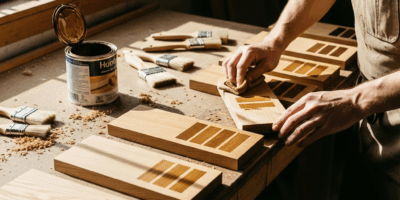
Hardwax oil — I mainly use Rubio Monocoat and Osmo Polyx-Oil — lives up to its one-coat promise. Apply it, work it into the wood with a white Scotch-Brite pad or a lint-free cloth, wipe off the excess after about ten minutes, done. Cure time with Rubio Monocoat runs 24 to 48 hours before the piece can take light use. Osmo is a little more forgiving on application but follows the same basic logic. One coat. Move on.
Tung oil is a drying oil pressed from the seeds of the tung tree that polymerizes inside wood as it cures. But there’s more going on here — it’s also one of the most misrepresented products on hardware store shelves. Most of what’s labeled “tung oil finish” is actually a wiping varnish blend that barely contains real tung oil. Pure tung oil requires multiple thin coats. Three to five minimum, sometimes more on open-grain woods like oak or ash. Each coat needs to dry completely — typically 24 hours in a warm shop, longer if your space drops below 60°F overnight. A full tung oil finish, done correctly, can eat five to seven days from start to final cure.
Frustrated by a client deadline early in my career, I once tried rushing the process by applying a second tung oil coat too soon on a cherry side table. Used about half a quart of Real Milk Paint Co. pure tung oil and a Saturday afternoon I won’t get back. The finish stayed tacky for nearly two weeks. I ended up wiping it all back, starting over from bare wood, and losing three days plus around $40 in materials. Take it from me.
- Rubio Monocoat Zero — around $65 for 350ml, covers roughly 160 square feet
- Osmo Polyx-Oil Raw (3044) — around $55 for 750ml
- Real Milk Paint Pure Tung Oil — around $35 per quart, which stretches further when thinned 1:1 with citrus solvent on first coats
Running a small production shop or finishing a piece that needs to ship by Friday? Hardwax oil wins this category. Not close.
Protection Level
Probably should have opened with this section, honestly, because the way these finishes protect wood is fundamentally different — and that difference should drive your decision more than anything else.
Hardwax oil forms a micro-thin layer that bonds to wood fibers right at the surface. The wax component repels water and most household liquids. The oil component reinforces the wood cells it contacts. It’s not a film finish — nothing like the thick plastic layer you get from polyurethane — but it creates a consistent barrier you can actually count on. Spill red wine on an Osmo-finished dining table and you have time to grab a cloth. That’s what makes hardwax oil endearing to us furniture makers who deal with nervous clients and real-world dining rooms.
Tung oil goes deeper. Each successive coat — especially the first application thinned with citrus solvent — soaks into the wood structure and polymerizes from within. The wood becomes less porous and less reactive to moisture because the oil has cured throughout the cellular structure itself, not just across the top. Water resistance is real, just different in character.
Wear patterns tell the story over time. Hardwax oil can scratch at the surface, though spot repairs are simple — you just re-oil the damaged area. Tung oil surfaces tend to wear more gradually and repair by re-oiling the whole surface evenly. Neither finish is as hard or impact-resistant as lacquer or conversion varnish. Worth knowing before you choose.
Outdoor furniture or anything taking harsh seasonal conditions — tung oil, for its penetrating protection. Interior pieces that see daily abuse from dishes, glasses, and elbows — hardwax oil handles that better in my experience.
Appearance and Feel
Run your hand across a piece finished with pure tung oil. Then run it across a piece finished with Rubio Monocoat. The difference hits you immediately.
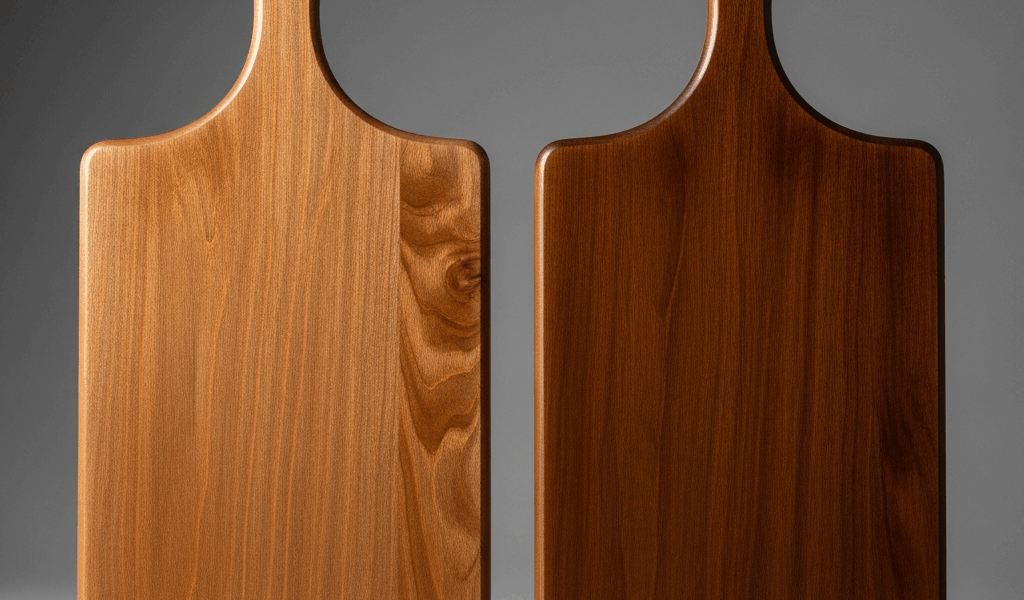
Tung oil finishes feel like wood. That’s genuinely the only way to describe it. You feel the grain, the texture, the slight variation across the surface. Sheen is almost nonexistent — maybe 5 to 10 degrees satin after multiple coats, closer to flat matte on some species. On walnut especially, tung oil does something no other finish I’ve used quite replicates. The color deepens, the grain pops, and the whole piece looks like it grew that way rather than got finished in someone’s shop on a Tuesday.
Hardwax oil has a bit more presence on the surface. Still very natural-looking compared to gloss polyurethane, but there’s a slight smoothness and a low sheen that reads as intentionally finished. Rubio Monocoat in particular has this consistent, almost velvety quality. It looks beautiful. Photographs well. Clients respond to it consistently — which matters more than people admit.
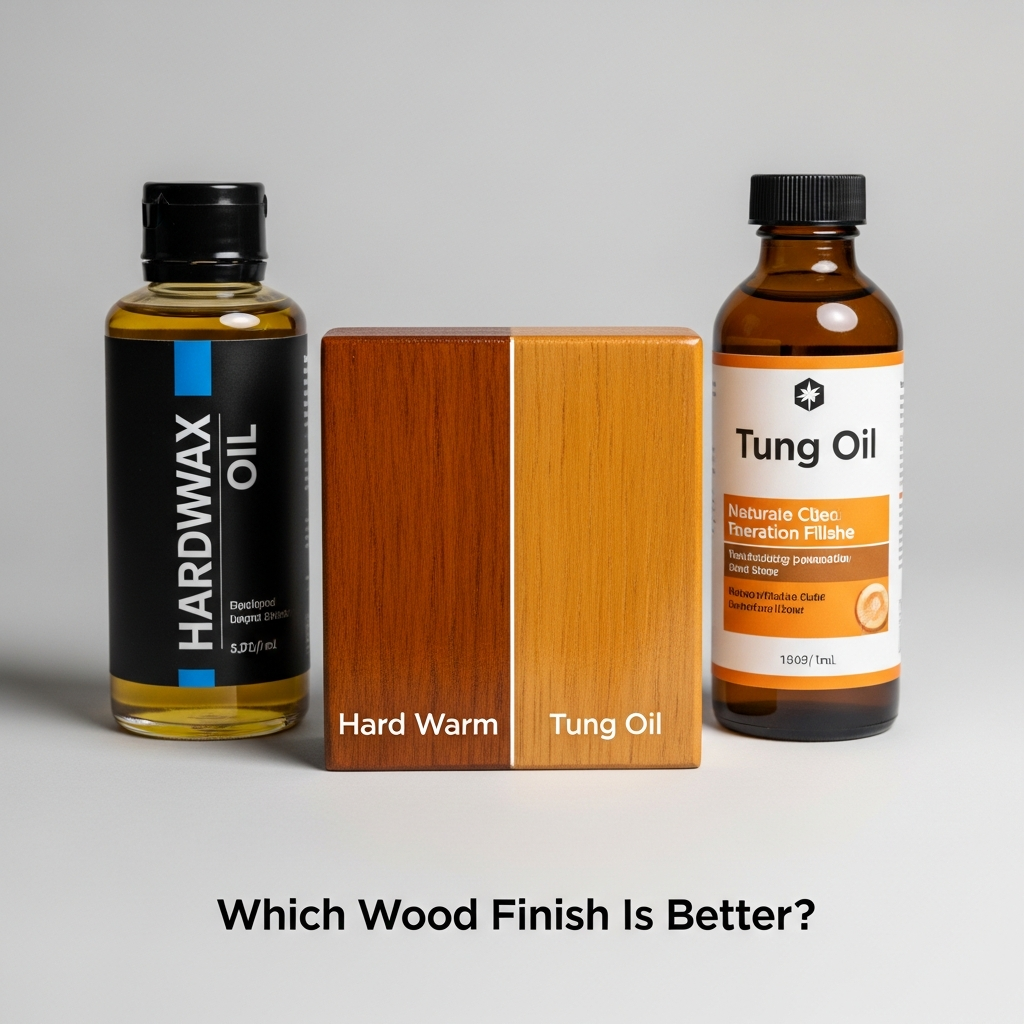
Color behavior varies by product. Rubio Monocoat’s pure base adds minimal ambering. Osmo adds a touch of warmth. Pure tung oil adds moderate warmth and depth — it darkens lighter woods like maple noticeably, which you might love or might not, depending on the project and the client.
Applied to quartersawn white oak, the two finishes tell completely different stories. Hardwax oil makes it look clean and contemporary. Tung oil makes it look like a piece your grandfather might have passed down. Neither is wrong.
- Best for contemporary or Scandinavian-style furniture — hardwax oil
- Best for traditional, Arts and Crafts, or heirloom-style pieces — tung oil
- Best when photography or client presentation matters — hardwax oil
- Best when tactile naturalness is the actual goal — tung oil
The Verdict
Here’s where I land after eleven years of using both: these finishes aren’t really competitors. They solve different problems.
Hardwax oil is probably the better pick for production work, as furniture-making at any volume requires speed without sacrificing quality. The reason is a dining table finished with Osmo Polyx-Oil can go on Monday morning and get delivered Thursday. That’s real. For a small shop trying to stay solvent and keep clients from calling every other day, that efficiency has direct financial value — not abstract value, actual dollars. I’ve never had a hardwax-oil-finished piece come back with complaints about the finish. Not once.
Tung oil is for pieces I’m building for myself, projects where I have the luxury of time, or clients who specifically want the most natural result possible. A blanket chest I built for my own bedroom last year got five coats of pure tung oil thinned with citrus solvent over ten days. Applied it in the evenings after the shop cleared out. It looks extraordinary — that finish is not going anywhere and it feels like wood, not like something applied to wood. There’s a satisfaction in that process the faster finishes don’t quite deliver.
This new approach of treating them as category-specific tools rather than competitors took off in my shop several years ago and eventually evolved into the system woodworkers who’ve visited know and recommend today. Ask yourself two questions before you open anything. Do you have a week? Do you want the wood to feel like wood or look like finished furniture? The answers point you in the right direction almost every time.
You probably don’t need a chemistry degree to navigate this, you will need a handful of reliable sources for actual pure tung oil. Don’t buy anything labeled “tung oil finish” from a big box store if you want the real thing. Start by check the ingredient disclosure — at least if you care whether you’re actually using tung oil or a varnish blend in disguise. Watco Danish Oil, Minwax Tung Oil Finish — those contain very little pure tung oil and behave like completely different products. Real Milk Paint Co., Sutherland Welles, and Hope’s sell genuine pure tung oil. It costs more and takes longer, but it’s a different product entirely from whatever’s in the orange can.
Both finishes belong in a serious woodworker’s shop. The question was never which one is universally better — it’s which one belongs on the piece sitting in front of you right now.

Stay in the loop
Get the latest classic custom wood furniture updates delivered to your inbox.