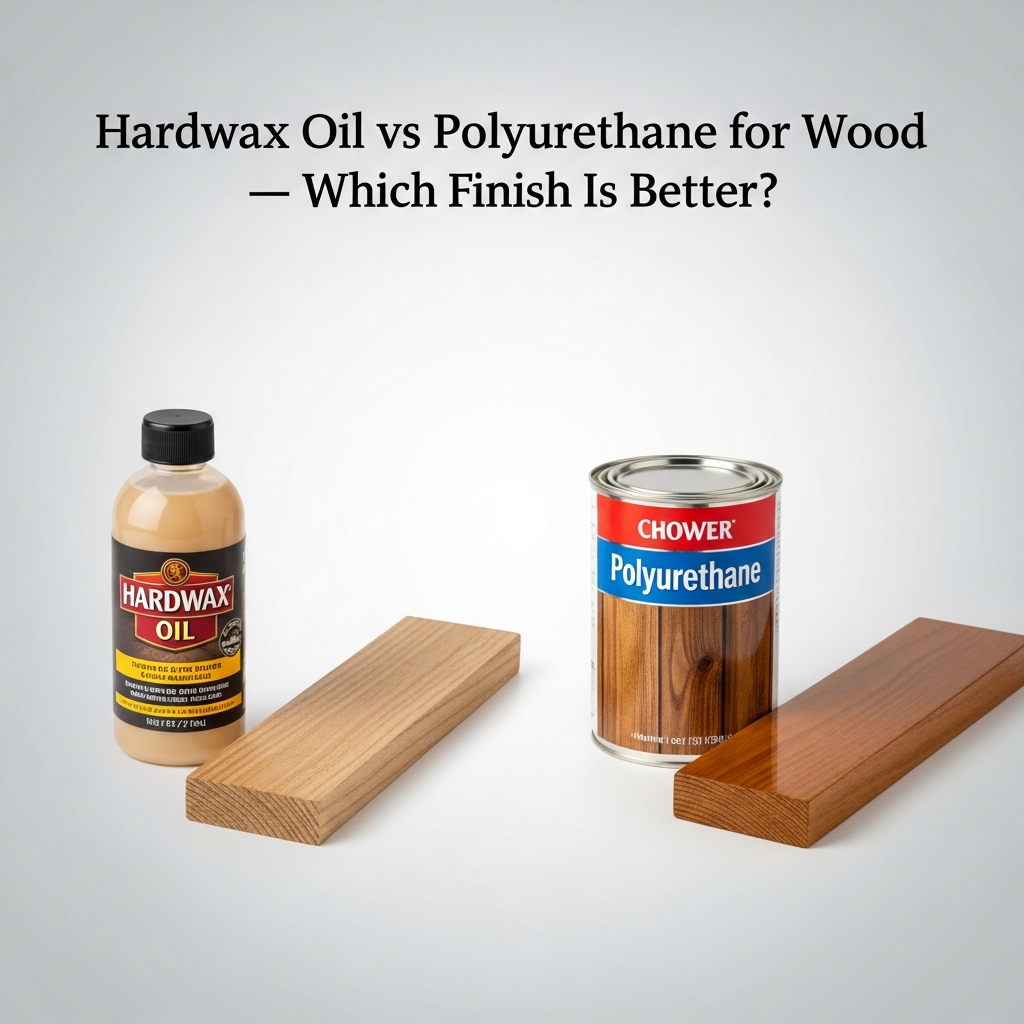
Hardwax Oil vs Polyurethane for Wood — Which Finish Is Better?
The hardwax oil vs polyurethane debate has more noise than signal these days. As someone who’s been building furniture professionally for eleven years, I figured out most of what you need to know. Kitchen tables, dining benches, floating shelves, entry consoles, the occasional credenza. Every single one needed a finish decision before it left my shop. I’ve run Minwax oil-based poly, water-based Varathane, Rubio Monocoat R9, and Osmo Polyx-Oil through their paces. What follows is what actually happened on real projects — not what the spec sheets promised.
This article includes affiliate links. We may earn a commission at no extra cost to you.
Short answer: hardwax oil wins for most furniture. Polyurethane earns its place in specific situations. The longer answer requires understanding why these two finishes behave so differently from each other — and they really do behave like completely different categories of product.
What Hardwax Oil Is and How It Differs From Poly
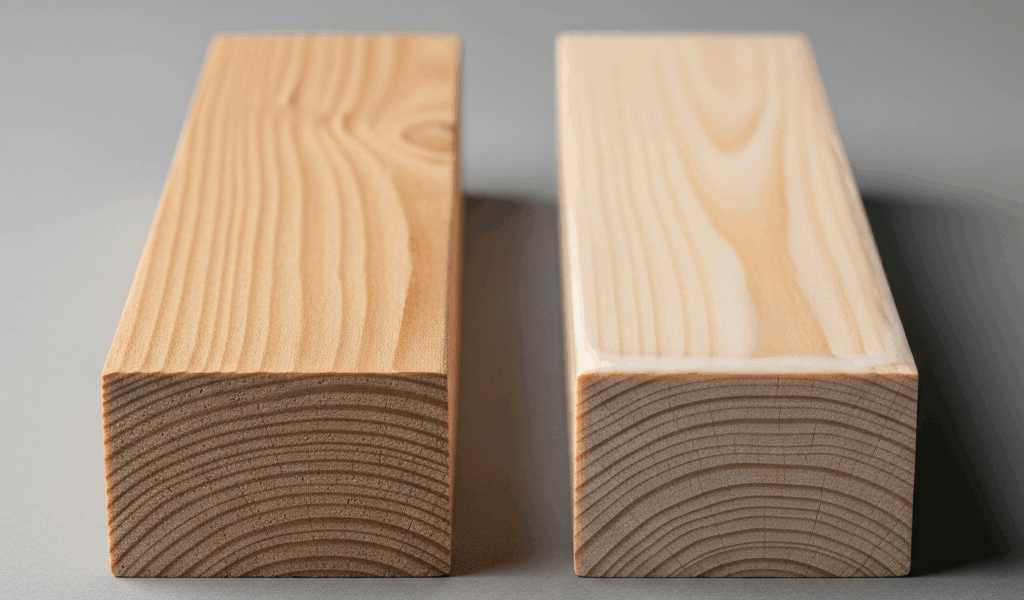
Hardwax oil is a blend of natural oils and waxes that penetrates into wood fibers and cures inside them rather than on top of them. But there’s more going on here — the distinction between a penetrating finish and a film finish changes almost everything about how these products perform over years of real use.
Polyurethane sits on top of the wood. Full stop. You apply it, it cures into a plastic film, and that film does the protecting. The wood underneath is essentially sealed inside a shell. Run your hand across a freshly coated poly surface and you’re touching urethane — not wood.
Hardwax oil works the opposite way. The wax fills the pores. The oil bonds chemically with the wood itself — Rubio Monocoat specifically uses a mono-molecular bonding process they’ve patented, where the finish reacts with the cellulose in the wood rather than forming a layer above it. Touch a hardwax oil surface and you’re touching wood. Treated wood, but wood.
This distinction matters more than almost anything else in the comparison. Everything downstream — the feel, the durability characteristics, the repair process, the cost — flows from this one fundamental difference.
Polyurethane creates a uniform barrier once it’s on. That barrier can scratch, chip, peel, or develop white rings from moisture trapped beneath it. Hardwax oil has no film to chip or peel. It can be abraded, worn down in heavy traffic areas — but it doesn’t fail the same way. You won’t get that cloudy, peeling look that haunts high-use poly surfaces after a few years. That’s what makes hardwax oil endearing to us furniture makers who’ve spent too many hours on the phone with unhappy clients.
Oil-based poly cures through solvent evaporation and oxidation — 24 to 48 hours between coats, realistically 30 days to reach full hardness. Water-based poly cures faster but is generally less durable and more prone to grain raising. Rubio Monocoat R9, the two-component version I use most often, cures through a chemical reaction between Part A and Part B, hitting usable hardness within about 36 hours and full cure in roughly five days.
Application and Repair — Where Hardwax Oil Wins
Probably should have opened with this section, honestly — because for a working furniture maker, application time is money, and the difference here is not subtle.
Three coats of oil-based poly on a dining table top means:
- Sand to 180 or 220, clean thoroughly
- Coat one — wait 24 hours minimum
- Light sand with 320, tack cloth
- Coat two — wait 24 hours
- Light sand again
- Coat three — wait 48 to 72 hours before delivery
That’s a four to five day finishing schedule at minimum.
Rubio Monocoat R9 on that same dining table top:
- Sand to 150 — not finer, the open grain helps absorption
- Mix Part A and Part B in a 3:1 ratio by weight
- Apply with a white Scotch-Brite pad or cotton cloth
- Work it in, buff off the excess after five to ten minutes
- Done
One coat. No second coat. No sanding between coats because there’s only one coat. Total active working time on a tabletop is maybe 45 minutes.
Which Finish for Which Project
Dining Tables and Kitchen Tables
Hardwax oil. Full stop. The spot repair capability alone makes it the right call. I use Rubio Monocoat R9 on almost everything now. For a warmer amber tone on walnut or cherry, I’ll reach for Osmo Polyx-Oil instead — it adds a slight warmth that Rubio’s Pure doesn’t, and on darker woods it looks genuinely beautiful.
Wood Floors
Hardwax oil wins here too, specifically because of spot repair. A section of floor near a kitchen sink or entryway can be refreshed with a maintenance coat of hardwax oil without sanding back to bare wood. With a poly floor, once the film wears through in spots, you’re looking at a full sand and recoat.
Cabinets and Shop Furniture
This is where polyurethane still earns its place. Cabinet doors and drawer fronts take repeated handling but not the same moisture and scratch exposure as a tabletop.
Outdoor Furniture
Neither finish is ideal for fully exposed outdoor use, honestly. Poly degrades in UV light and peels. Hardwax oil weathers better but still requires reapplication every year or two.
Workbenches and Shop Surfaces
Raw linseed oil or nothing. Save your money.
The decision between hardwax oil and polyurethane used to feel complicated. It doesn’t anymore. For anything that a person eats at, works at, or touches every day, hardwax oil — specifically Rubio Monocoat R9 or Osmo Polyx-Oil — is the better finish. It looks better, repairs better, and once you factor in labor, it costs less. Polyurethane is a known quantity with a long track record, and it still has legitimate uses in cabinetry and specific applications. But if someone put a dining table in my shop tomorrow and gave me a free choice of finish, I’d open the Rubio. Every time.

Stay in the loop
Get the latest classic custom wood furniture updates delivered to your inbox.