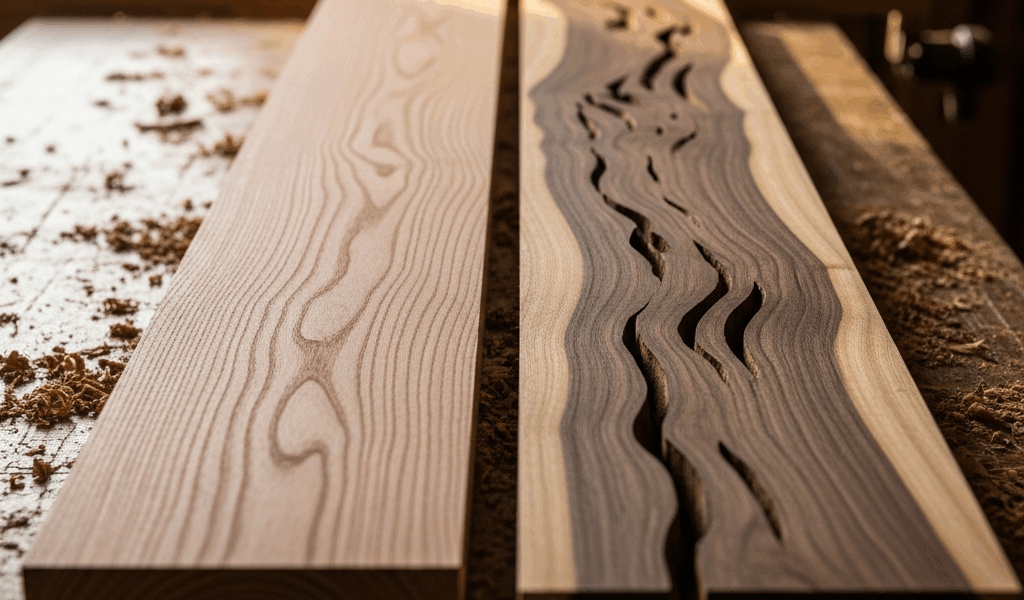
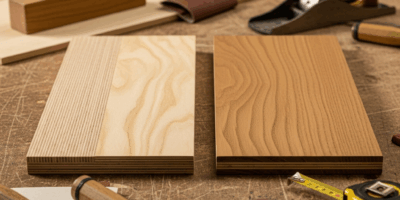
Cherry and black walnut are both excellent furniture woods, but they create very different pieces. Choose cherry when you want a warm reddish-brown color that deepens noticeably with age. Choose walnut when you want naturally dark brown heartwood, stronger light-to-dark contrast, and a more immediate contemporary look.
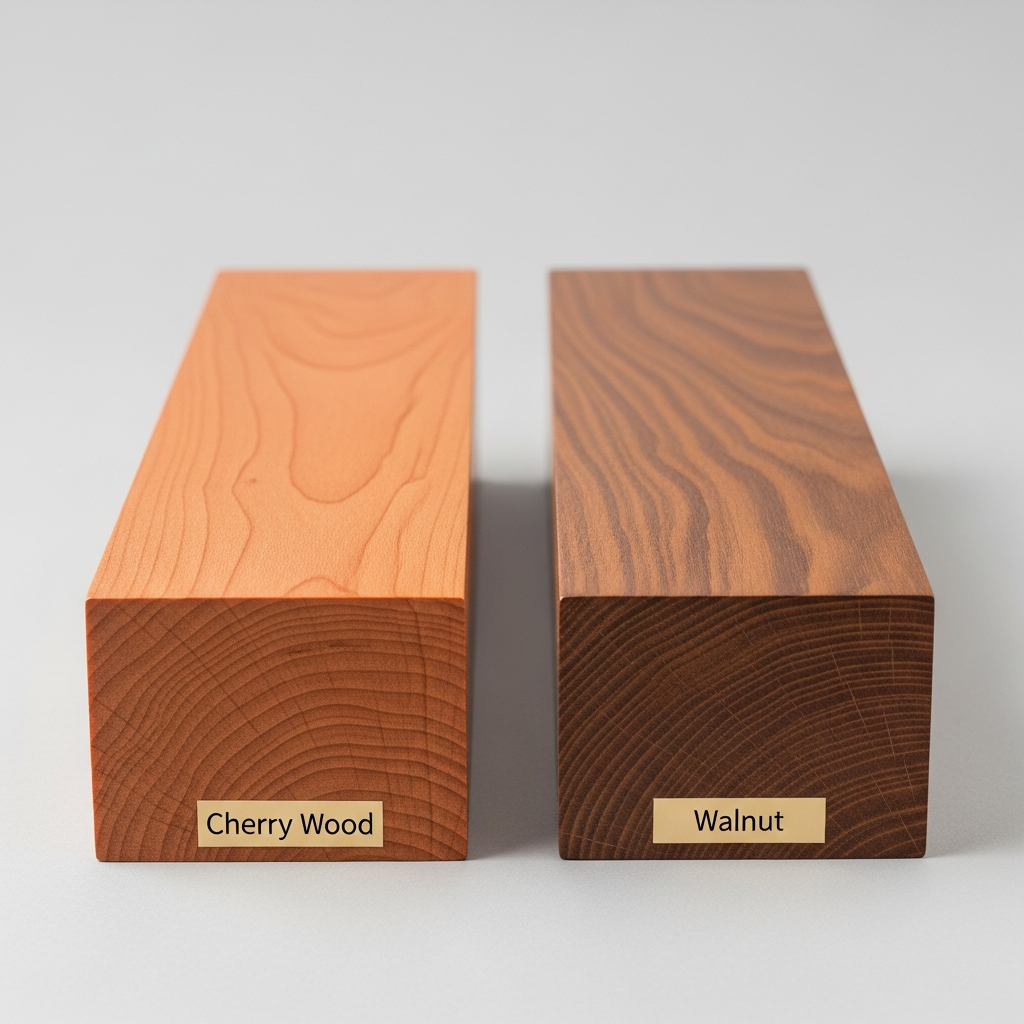
Cherry vs Walnut: Quick Comparison
| Factor | Black cherry | Black walnut |
|---|---|---|
| Typical heartwood color | Light to dark reddish brown; darkens with age | Light to dark brown, sometimes with darker streaks |
| Sapwood | White to light reddish brown | Nearly white and visibly lighter than the heartwood |
| Grain and texture | Usually straight, fine and even | Usually straight, sometimes figured, with a slightly coarser appearance |
| Machining | Machines, turns, planes, glues and screws well | Generally easy to work and machines well |
| Color change | Darkens substantially with age and light exposure | Can become lighter or warmer with long exposure; boards vary |
| Best visual fit | Warm, traditional, Shaker-inspired or understated furniture | Dark, high-contrast, contemporary or mid-century-inspired furniture |
These are species-level tendencies, not guarantees. Color, figure, sapwood, defects, cut, drying, and board selection can matter more than the species name on an individual project.
How Cherry Changes Color
Fresh black cherry can look surprisingly pale or pinkish. The USDA Forest Service describes its heartwood as light to dark reddish brown and notes that the color darkens with age. Light exposure accelerates the visible change, but there is no universal three-, six-, or twelve-month schedule: finish, room lighting, exposure, and the individual board all affect the result.
That change matters on tabletops and casework. A runner, book, lamp, or placemat can shield one area while the surrounding surface darkens. Move objects periodically during the first months if an even appearance matters. Uneven areas generally become less conspicuous after they receive similar exposure, but exact matching is not guaranteed.
How Walnut Changes Color
Black walnut heartwood ranges from light to dark brown, while its sapwood is nearly white. A clear finish makes that natural contrast obvious. Some commercial walnut is steamed to reduce the color difference between sapwood and heartwood, so ask the lumber supplier how the boards were processed if color matching is important.
Walnut is not completely color-stable. Long-term light exposure and finish aging can shift its appearance. Buy enough material at once, compare boards under the intended finish, and avoid promising that new walnut will remain exactly the same shade.
Strength, Dents, and Furniture Use
Both species have a long record in furniture and cabinetry. USDA references describe cherry as moderately hard, stable after drying, easy to machine, and capable of a smooth finish. Black walnut is described as strong, shock-resistant, stable in use, and easily worked with tools.
Published hardness figures put black walnut only modestly above black cherry. That difference rarely decides whether a dining table survives daily use. Joinery, grain orientation, board defects, moisture control, finish choice, and how the piece is treated matter more. Either wood can dent under a hard impact.
Working and Finishing Differences
Cherry generally machines cleanly, but it can scorch when a dull blade or bit rubs instead of cutting. Keep cutters sharp and use an appropriate feed rate. Cherry can also show uneven color under penetrating stain, so test the entire finish schedule on offcuts from the project.
Walnut usually works well with hand and power tools and is often finished clear to preserve its natural heartwood color. Pale sapwood can be included as a design feature, placed in less visible parts, or toned during finishing. Do not assume a dark stain will make mismatched boards identical.
With either species, use dust collection and respiratory protection appropriate to the operation. Wood dust is a health hazard regardless of species, and individual reactions vary.
Can You Use Cherry and Walnut Together?
Yes. Cherry and walnut can work well together when the contrast is deliberate. Walnut can frame a cherry panel, form drawer pulls or bases, create inlay, or provide dark accents. The safest design approach is to repeat each species in more than one place so the combination looks planned rather than patched.
Remember that the contrast will evolve: cherry typically darkens while walnut may shift differently. Make a sample with the same boards, glue, sanding sequence, and finish, then place it in the room where the furniture will live. A fresh shop sample alone cannot show the final relationship.
Which Should You Choose?
- Choose cherry for a fine, even texture; warm color; easy machining; and a pronounced natural patina.
- Choose walnut for naturally dark heartwood, stronger sapwood contrast, figured-board possibilities, and an immediate dark appearance.
- Use both when contrast is part of the design and you have tested how the actual boards look under the intended finish.
Do not choose from an online photograph or a species label alone. Compare full-size boards for color, grain, sapwood, defects, width, moisture, and price at your local supplier. Lumber prices change by grade, thickness, width, region, and availability, so a fixed national price range quickly becomes misleading.

Stay in the loop
Get the latest classic custom wood furniture updates delivered to your inbox.