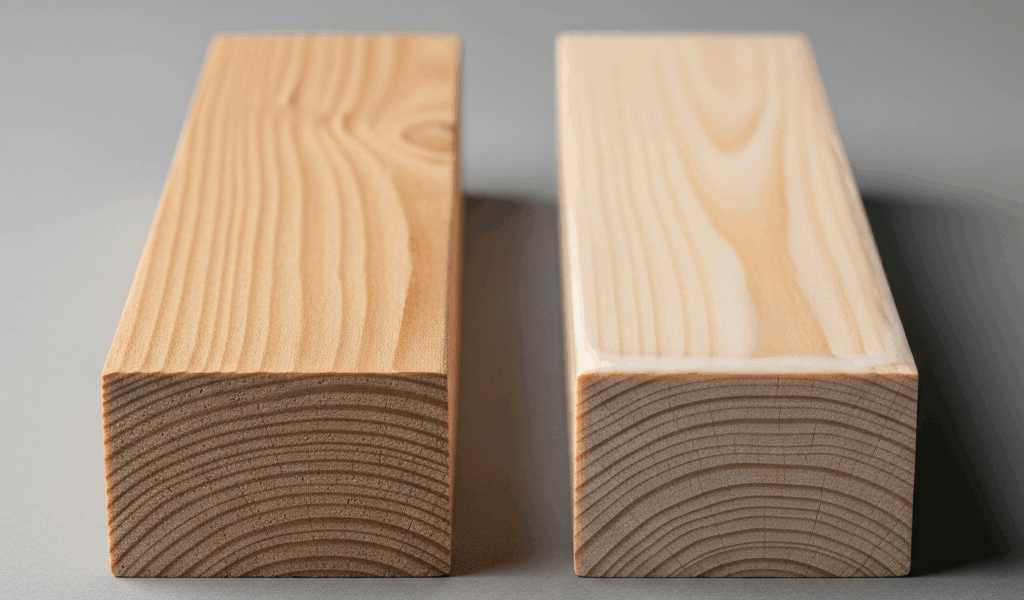
Hardwax Oil vs Polyurethane for Wood — Which Finish Is Better?
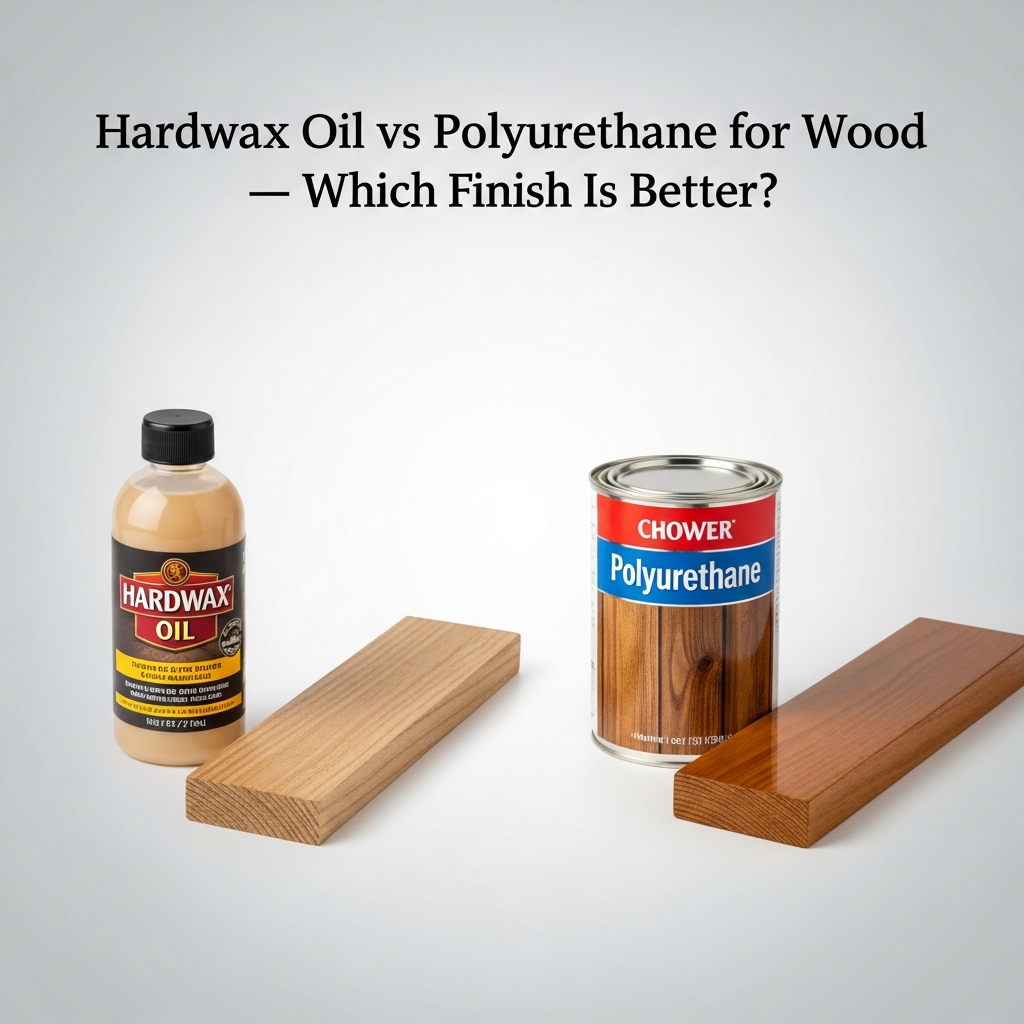
The hardwax oil vs polyurethane debate has been running in woodworking circles for at least a decade, and I’ve landed firmly on both sides of it at different points in my career. I’ve been building furniture professionally for about eleven years. Kitchen tables, dining benches, floating shelves, entry consoles, the occasional credenza — and every single one of those pieces needed a finish decision before it left my shop. I’ve used Minwax oil-based poly, water-based Varathane, Rubio Monocoat R9, and Osmo Polyx-Oil. What I’m going to tell you here is what actually happened on real projects, not what the technical data sheets promised.
Short answer: hardwax oil is better for most furniture. Polyurethane is better in specific situations. The longer answer requires understanding why these two finishes behave so completely differently from each other.
What Hardwax Oil Is and How It Differs From Poly
Polyurethane sits on top of the wood. That’s the core thing to understand. You apply it, it cures into a plastic film, and that film is what’s protecting the surface. The wood underneath is essentially sealed inside a shell. Run your hand across a freshly coated poly surface and you’re touching urethane, not wood.
Hardwax oil works the opposite way. It penetrates into the wood fibers and cures inside them. The wax component fills the pores. The oil bonds chemically with the wood itself — Rubio Monocoat specifically uses a mono-molecular bonding process they’ve patented, where the finish actually reacts with the cellulose in the wood rather than sitting on top of it. You touch a hardwax oil surface and you’re touching wood. Treated wood, but wood.
This distinction matters more than almost anything else in the comparison, because everything downstream — the feel, the durability characteristics, the repair process, the cost — flows from this one fundamental difference.
Polyurethane, once it’s on, creates a uniform barrier. That barrier can scratch, chip, peel, or develop white rings from moisture trapped beneath it. Hardwax oil has no film to chip or peel. It can be abraded, and it can be worn down in heavy traffic areas, but it doesn’t fail the same way. You won’t get that cloudy, peeling look that haunts high-use poly surfaces after a few years.
Oil-based poly cures through solvent evaporation and oxidation. It takes 24 to 48 hours between coats and realistically 30 days to reach full hardness. Water-based poly cures faster but is generally less durable and more prone to grain raising. Rubio Monocoat R9 (the two-component version I use most often) cures through a chemical reaction between Part A and Part B, reaching usable hardness within about 36 hours and full cure in roughly 5 days.
Durability — The Real-World Test
Here’s where I’m going to be honest in a way most finish reviews aren’t.
I built a white oak kitchen table in 2019. Eight feet long, three-inch thick top, breadboard ends. The clients wanted a natural look, so I finished it with three coats of Rubio Monocoat in Pure (no color). That table has two kids under ten, a dad who apparently sets wet glasses down without coasters, and a mom who told me she wipes it down with whatever spray cleaner is handy. I checked in with them about eight months in and then again at the two-year mark.
The finish held up well. Some visible wear around the chairs where arms drag across the edge. A few light scratches. No water rings — the hardwax oil’s wax component repels water well enough that casual moisture doesn’t penetrate. They did get one fairly deep scratch from something that happened during a birthday party. We’ll come back to what they did about that.
Contrast that with a walnut coffee table I finished in 2017 with three coats of Minwax Wipe-On Poly (oil-based, satin). That client had no kids, careful habits, and low traffic. By year three, there was visible edge wear where the film had chipped at the corners, and there was one white ring from a cold glass that clearly trapped moisture under the poly. The film look had also started to feel dated — that plasticky sheen that poly develops over time, especially in direct light.
Scratch resistance comparison, straight up: polyurethane film is harder and more scratch-resistant on paper. If you drag a key across a cured poly surface vs. a hardwax oil surface, the poly wins. But poly fails catastrophically when it fails. One deep scratch through the film means moisture can get under the coating and start lifting it. A scratch in hardwax oil is just a scratch in the wood. No film to undercut.
Water resistance is where hardwax oil surprised me. Rubio Monocoat and Osmo both bead water extremely well when freshly applied or maintained. The wax component is genuinely hydrophobic. Left standing overnight, water will eventually penetrate — it’s not a waterproof coating — but for normal kitchen and dining table use, it performs better than I expected and comparably to poly for the first few years.
Heat resistance is poly’s win. A hot pan directly on a hardwax oil surface will leave a mark. Same pan on cured poly probably will too, but poly has a slight edge here. Neither finish is rated for direct heat contact, and I tell every client this regardless of what I’m using.
Application and Repair — Where Hardwax Oil Wins
Probably should have opened with this section, honestly, because for a working furniture maker, application time is money.
Three coats of oil-based poly on a dining table top means:
- Sand to 180 or 220, clean thoroughly
- Coat one — wait 24 hours minimum
- Light sand with 320, tack cloth
- Coat two — wait 24 hours
- Light sand again
- Coat three — wait 48 to 72 hours before delivery
That’s a four to five day finishing schedule, minimum. With water-based poly you can compress that to two days if conditions are right (low humidity, good ventilation, temperatures above 65°F). But you’re still doing multiple applications, multiple sanding steps, and you need to be careful about brush marks, runs, and dust nibs. Dust is the enemy of a film finish. A single piece of dust cured into your final coat means you’re either sanding it out (and risking witness lines) or living with it.
Rubio Monocoat R9 application on that same dining table top:
- Sand to 150 (not finer — the open grain helps absorption)
- Mix Part A and Part B in a 3:1 ratio by weight (I use a small postal scale, same one every time)
- Apply with a white Scotch-Brite pad or cotton cloth
- Work it in, buff off the excess after 5 to 10 minutes
- Done
One coat. No second coat. No sanding between coats because there’s only one coat. Dust on the surface while it’s curing isn’t a crisis — it wipes off. Brush marks are impossible because you’re using a pad and buffing it. Total active working time on a tabletop is maybe 45 minutes.
The repair story is where hardwax oil genuinely changes the game. Remember that birthday party scratch on the white oak table? The client went to a local flooring store that carried Rubio Monocoat, bought a small bottle of Pure, rubbed it into the scratched area with a cloth, buffed it off, and it blended. Not invisible — the scratch is still slightly visible if you look for it in raking light — but no obvious repair zone, no color mismatch, no need to refinish the whole top.
Repairing poly is a different story. A spot repair on a film finish almost always shows. You can feather it, you can wet-sand the surrounding area, you can try to blend — but you’re fighting against the fact that you’re adding new film on top of aged film. Most of the time, a serious scratch on a poly table eventually means stripping and refinishing the whole surface. That’s hours of labor.
I’ve made the mistake of trying to spot-repair oil-based poly. Once. The sheen never matched and the client noticed. Never again.
Cost Comparison — Rubio Monocoat vs Minwax Poly
Raw materials first. Minwax oil-based polyurethane runs about $15 to $20 per quart at the hardware store. A quart covers roughly 125 square feet per coat, so three coats on a 20-square-foot tabletop uses about half a quart — call it $10 in materials.
Rubio Monocoat R9 is expensive upfront. A 350ml kit (Part A and Part B combined) runs about $65 to $75 depending on where you buy it. That kit covers approximately 160 to 215 square feet in a single coat, depending on wood species and porosity. The same 20-square-foot tabletop uses maybe a quarter of that kit — around $17 to $18 in materials.
Osmo Polyx-Oil is slightly more economical than Rubio. A 750ml can runs about $55 to $65 and covers around 215 square feet for the first coat (less for subsequent coats). Osmo typically recommends two coats, so your coverage math changes — but it’s still competitive.
So hardwax oil costs roughly 1.5 to 2 times more in raw materials per project. On a typical dining table, we’re talking a difference of maybe $25 to $40.
But here’s the actual math that matters when you’re running a shop: labor.
Frustrated by a five-day finishing queue that was backing up my production schedule, I started tracking finishing time per project in 2021. A standard dining table finished with three coats of oil-based poly took me an average of 4.5 hours of active finishing labor spread across five days. The same table finished with Rubio Monocoat R9 took about 1.2 hours of active finishing labor in a single day. At $75 an hour shop rate, that’s a difference of $247.50 in labor. The $30 material premium becomes irrelevant.
For a DIYer finishing one piece at a time, the labor savings are less dramatic but still real. Fewer coats means fewer chances for drips, runs, and dust contamination. Fewer failures means fewer do-overs.
Which Finish for Which Project
After eleven years and more surfaces than I can accurately count, here’s where I’ve landed.
Dining Tables and Kitchen Tables
Hardwax oil. Full stop. The spot repair capability alone makes it the right call. Dining tables take abuse. Clients spill things, drag things, set hot mugs down, and generally use them hard. A finish that can be locally repaired without full refinishing is worth every penny of the material premium. I use Rubio Monocoat R9 on almost everything now. For a warmer amber tone on walnut or cherry, I’ll use Osmo Polyx-Oil instead — it adds a slight warmth that Rubio’s Pure doesn’t.
Wood Floors
Hardwax oil wins here too, specifically because of spot repair. A section of floor that gets heavy traffic near a kitchen sink or entryway can be refreshed with a maintenance coat of hardwax oil without sanding back to bare wood. With a poly floor, once the film wears through in spots, you’re doing a full sand and recoat. Most flooring contractors now offer Rubio Monocoat and Osmo as options, and the demand has been growing steadily.
Cabinets and Shop Furniture
This is where polyurethane still earns its place. Cabinet doors and drawer fronts take repeated handling but not the same kind of moisture and scratch exposure as a tabletop. A good water-based poly — I’ve used General Finishes Enduro-Var and been happy with it — gives you a harder, more abrasion-resistant surface that holds up well to years of hand contact. The spot repair limitation matters less on a cabinet door, and the faster dry time of water-based poly makes production finishing more manageable. Osmo also makes a dedicated cabinet finish (Polyx-Oil Rapid) that I’ve used with good results if you want to stay in the hardwax oil family.
Outdoor Furniture
Neither finish is ideal for fully exposed outdoor use, to be honest. Poly degrades in UV light and peels. Hardwax oil weathers better but still requires reapplication every year or two for outdoor pieces. Osmo UV-Protection Oil is formulated specifically for outdoor use and is the closest thing to a hardwax oil solution for exterior furniture. For outdoor pieces in covered spaces — a porch table, a pergola dining set — I use it regularly and recommend annual maintenance coats.
Workbenches and Shop Surfaces
Raw linseed oil or nothing. Save your money.
The decision between hardwax oil and polyurethane used to feel complicated to me. It doesn’t anymore. For anything that a person eats at, works at, or touches every day, hardwax oil — specifically Rubio Monocoat R9 or Osmo Polyx-Oil — is the better finish. It looks better, it repairs better, and once you factor in the labor savings, it costs less. Polyurethane is a known quantity with a long track record, and it still has legitimate uses in cabinetry and specific applications. But if someone put a dining table in my shop tomorrow and gave me a free choice of finish, I’d open the Rubio. Every time.
Stay in the loop
Get the latest classic custom wood furniture updates delivered to your inbox.