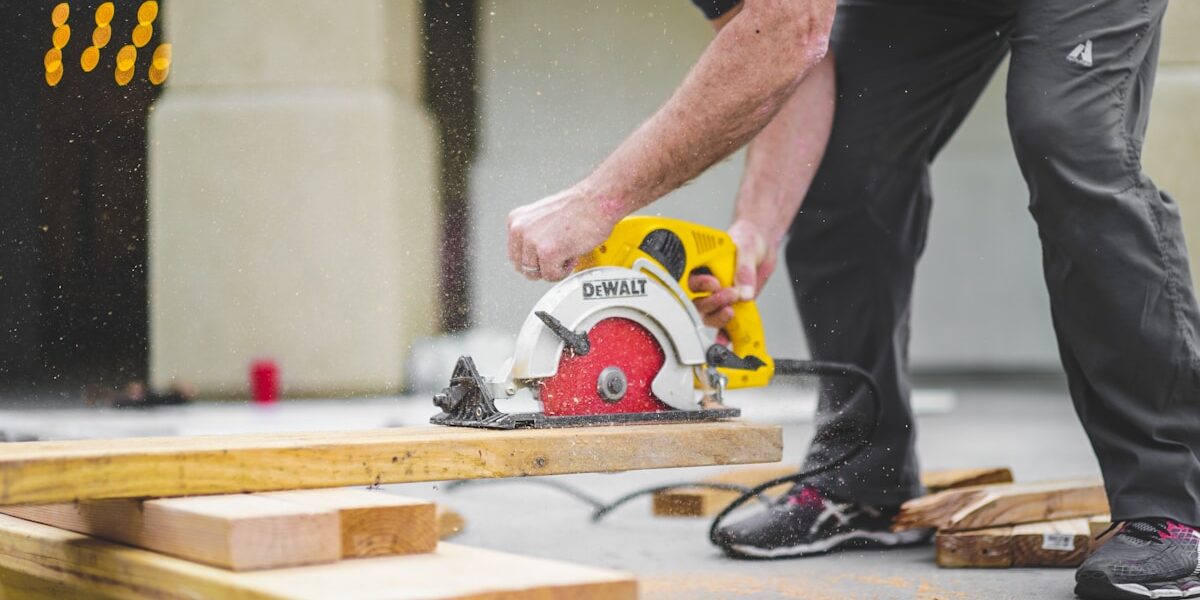
Essential hand tools for woodworking have gotten complicated with all the premium brands and collector hype flying around. As someone who reaches for hand tools constantly throughout every project — measuring, marking, small adjustments, fitting — I learned everything there is to know about building a collection that actually works for you. Today, I will share it all with you.
Measuring and Marking Tools
Power tools get all the attention on YouTube and Instagram. But my most-used tools are the unglamorous measuring and marking tools I pick up dozens of times per day.
Get a decent tape measure. Cheap tapes lie. The hook gets sloppy, the blade kinks, and suddenly your measurements are off by a sixteenth. A Stanley FatMax or Milwaukee tape with a rigid blade that extends without flopping over makes a real difference in accuracy.
A combination square is probably my single most-used tool in the entire shop. Checking square on a cut, marking lines parallel to an edge, setting blade heights, transferring measurements — this one tool does everything. Do not cheap out here. Starrett is the gold standard, but if the price makes you flinch, the Swanson or iGaging options are surprisingly accurate for a fraction of the cost.
A marking gauge draws consistent lines parallel to board edges. Once you start using one, you wonder how you ever worked without it. Essential for laying out tenons, mortises, and dovetails.
Sharp pencils sound trivial but mechanical pencils with thin lead mark far more precisely than thick carpenter pencils. I keep a half-dozen mechanical pencils scattered around my shop. That’s what makes good measuring tools endearing to us woodworkers — they make everything else you do more accurate.
Cutting Tools
Probably should have led with this section, honestly. Japanese pull saws cut on the pull stroke, which puts the blade in tension and allows a much thinner kerf than Western push saws. The thin kerf means less waste and more precise cuts. They are my go-to for any hand sawing task — crosscutting, joinery, trimming. A quality Japanese saw like a Suizan or Gyokucho runs about twenty to thirty dollars and lasts for years.
Western-style back saws push through the material and have a different feel. Some woodworkers prefer them, especially for dovetails. Try both styles and commit to whichever one clicks with your natural motion. There is no wrong answer here.
Chisels — Quality Over Quantity
Start with a basic set of four: quarter-inch, half-inch, three-quarter-inch, and one-inch. Those four sizes cover the vast majority of chiseling you will do on furniture and cabinet projects. Quality steel matters far more than having a dozen sizes. Narex makes excellent chisels at a reasonable price, and they hold an edge well after sharpening. Learn to sharpen before you invest in expensive sets — there is no point buying premium steel if you cannot maintain the edge.
Planes
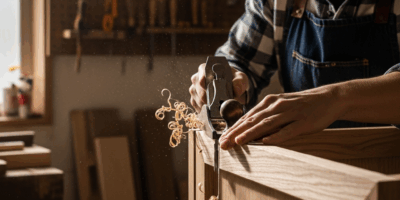
A block plane handles small tasks — chamfering edges, trimming end grain, fitting joints, cleaning up glue squeeze-out. It lives in my apron pocket when I am working at the bench. Essential. Buy a decent one — a Stanley number sixty and a half or a low-angle block plane from any reputable maker.
A bench plane — number four or number five — handles flattening and smoothing larger surfaces. Setup and sharpening matter dramatically more than what brand you buy. A properly tuned fifty-dollar vintage Stanley outperforms a neglected three-hundred-dollar premium plane every day of the week.
The Secret Nobody Tells Beginners
Sharp tools make all the difference. Every single difference. Dull hand tools are frustrating, dangerous, and produce terrible results. Learn to sharpen early in your woodworking journey. Make it a habit. The craft opens up completely once your tools are actually cutting instead of tearing through the wood.


Stay in the loop
Get the latest classic custom wood furniture updates delivered to your inbox.