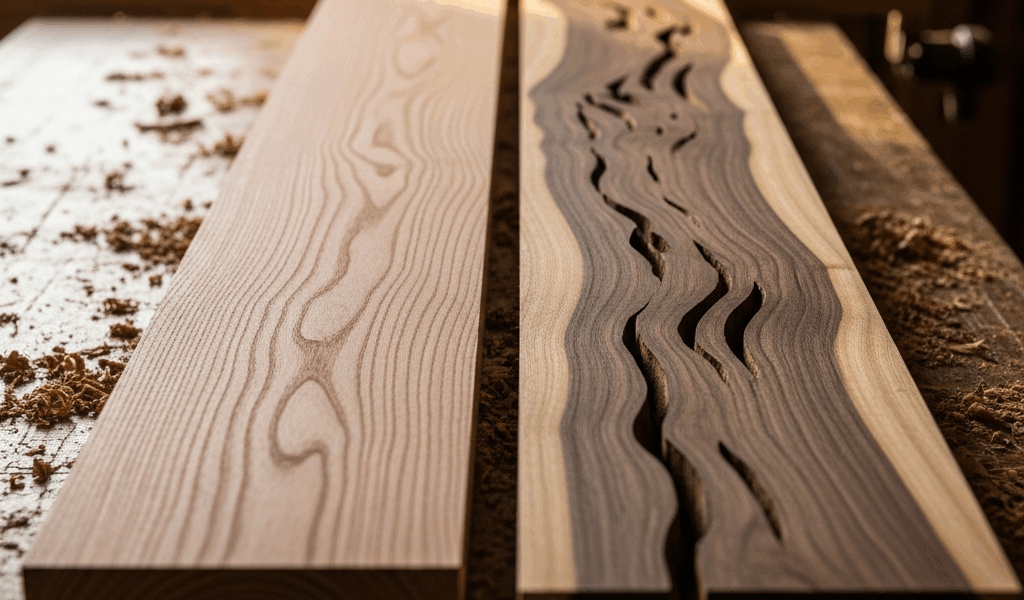
You’re building a dining table or a set of chairs and you’ve narrowed the wood choice down to cherry or walnut. Both are premium American hardwoods, both build beautiful furniture, and both cost more than oak or maple. The question is which one is right for your project, and the answer depends on something most people don’t consider: what you want the piece to look like in five years.
Cherry vs Walnut — The Classic American Furniture Choice
These two species have defined American fine furniture for centuries. Shaker furniture was traditionally built from cherry. Federal-period pieces often used walnut. Mid-century modern designers gravitated toward walnut. Both woods work beautifully, finish superbly, and hold up to generations of use. The choice between them is fundamentally about color behavior and aesthetic preference, not quality.
The immediate visual difference: freshly milled walnut is deep chocolate-brown with occasional lighter sapwood streaks. Freshly milled cherry is pale reddish-tan, almost pinkish. They look nothing alike on the bench. But give cherry a year of sunlight exposure, and the gap closes substantially.
How Cherry Changes Over Time
Cherry’s defining characteristic is its photosensitive patina. Fresh cherry lumber is pale — light enough that clients sometimes question whether it’s really cherry. Within 3 to 6 months of UV exposure (even indirect room light counts), the wood begins darkening. By 12 months, it’s deepened into the rich reddish-brown that most people associate with cherry furniture. After several years, the color stabilizes into a warm amber-red that’s impossible to replicate with stain.
This color evolution is either the best feature of cherry or the most frustrating, depending on the client. Furniture delivered in January will look noticeably different by July. Areas covered by a table runner or placemat will stay lighter than exposed surfaces, potentially creating tan lines that take months to even out once uncovered.
For furniture makers, the patina factor means managing client expectations. New cherry furniture does not look like the cherry furniture in the catalog or the antique shop. It will get there, but it takes time. Showing clients a sample board with fresh cherry alongside a year-old piece of the same board prevents most disappointment.
Walnut — What You See Is (Mostly) What You Get
Walnut’s color is largely stable from the day you apply the finish. The rich chocolate-brown heartwood that drew you to the wood in the first place will look essentially the same in five years. With heavy, direct UV exposure over many years, walnut can lighten slightly — the dark brown fades toward a lighter tan-brown. But the shift is subtle and gradual compared to cherry’s dramatic transformation.
The sapwood question: walnut boards typically include some lighter sapwood along one or both edges. Some furniture makers steam the lumber to blend the sapwood color closer to the heartwood. Others embrace the sapwood as part of the wood’s natural character — the contrast between dark heartwood and pale sapwood can be striking in the right design. Your call.
Walnut delivers immediate visual impact. The day you finish a walnut dining table, it looks like a walnut dining table. There’s no waiting period, no color development, no managing expectations about what the piece will look like in six months.
Working Properties in the Shop
Cherry (Janka hardness 950): Works easily with both hand and power tools. Machines cleanly with sharp cutters. Responds beautifully to oil finishes, shellac, and lacquer. Slight blunting effect on tool edges over extended work — about average for domestic hardwoods. Cherry sands to a silky-smooth surface that takes finishes exceptionally well. One caveat: cherry can burn easily with router bits and saw blades if feed rate is too slow. Keep the wood moving.
Walnut (Janka hardness 1010): Excellent working properties across the board. Slightly harder than cherry, which means marginally more resistance to dings and dents in the finished piece. Less prone to blotching with applied stains (though most walnut furniture is finished without stain). Walnut dust can cause skin irritation and respiratory sensitivity in some people — a good dust collection setup matters more with walnut than with cherry.
Both species are prized by hand tool woodworkers for their forgiving grain structure. Neither tends to tear out badly when planed, and both respond well to scraping and hand sanding for a final surface.
The Verdict — Which Wood for Your Furniture
Choose cherry if: You’re building traditional American furniture (Shaker, Queen Anne, Federal styles). Cherry is what those pieces were originally made from, and the natural patina is part of the design intent. You’re comfortable with the color evolution — or you actively want it. You want a piece that looks one way now and develops deeper character over years of living with it.
Choose walnut if: You want immediate dark visual impact with no waiting period. You’re building contemporary or mid-century modern designs where walnut’s rich brown tone anchors the aesthetic. Your client needs the finished piece to match existing walnut furniture or dark decor elements. You want color stability — no surprises a year from now.
Price: Both are premium domestic hardwoods. Current retail prices from quality hardwood dealers typically run $8-14 per board foot for cherry and $9-16 per board foot for walnut, depending on grade, width, and regional availability. Walnut usually carries a small premium, but the gap fluctuates. Neither is cheap — budget accordingly, and buy 15-20% extra for waste and defect culling.



Stay in the loop
Get the latest classic custom wood furniture updates delivered to your inbox.