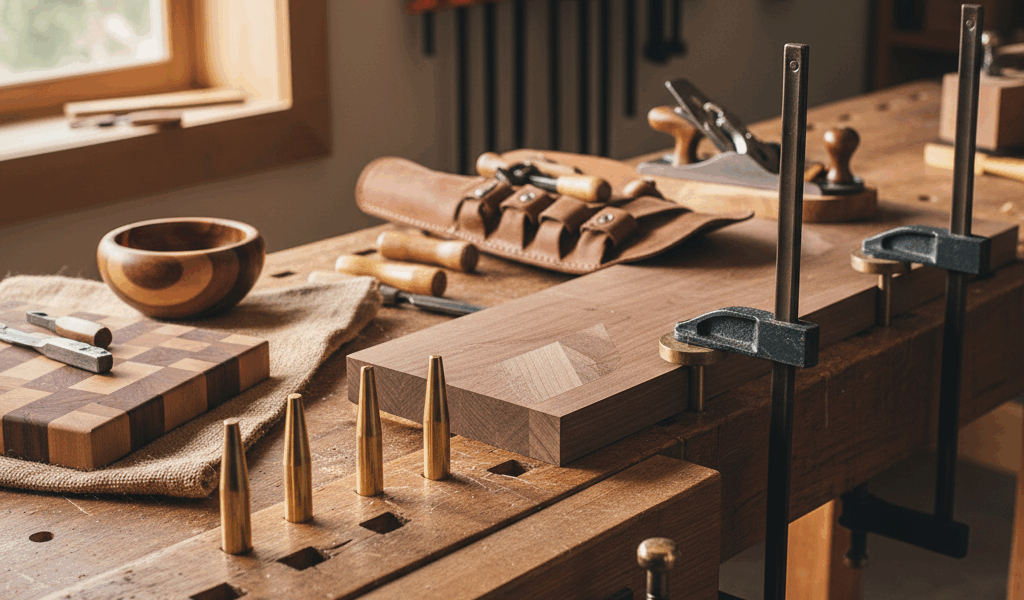
Workholding has gotten complicated with all the fancy vise systems and specialty clamps flying around. As someone who spent way too long early on just clamping everything to my bench with random C-clamps and hoping for the best, I learned everything there is to know about bench dogs and holddowns. Today, I will share it all with you.
Why Proper Workholding Changes Everything
Once I finally set up real workholding on my bench, everything got easier. Safer cuts because the work does not shift mid-stroke. Cleaner results because I can use both hands on the tool instead of one hand holding the workpiece. Less frustration overall. I genuinely wish I had invested in workholding sooner instead of fighting with clamps for years.
That’s what makes a well-equipped workbench endearing to us hand tool woodworkers — it becomes a tool itself, not just a table you set things on.
Bench Dogs — Simpler Than You Think
Probably should have led with this section, honestly. Bench dogs are just pegs that fit into holes drilled in your workbench top. They work together with your end vise to trap workpieces horizontally for planing, sanding, and other operations where you need the piece locked in place but accessible from above.
Round dogs versus square dogs is a debate that has been going on forever. Round dogs are easier because you just drill holes — no mortising required. They can rotate for angled work too, which is handy. Square dogs grip better because they have flat faces contacting the workpiece, but they need mortised square holes which take more effort to make. Most modern benches use round dogs, and I think that is the right call for most people.
Metal dogs versus wood dogs is the other choice. Metal dogs last forever and grip aggressively, but they can nick your plane blade if you accidentally plane into one. That is a bad fifteen minutes of sharpening you did not plan on. Wood dogs are free to make from scrap dowel or hardwood, easy to replace when they get chewed up, and will not damage your tools if you make a mistake. I use wood dogs for most of my work and keep a couple metal ones around for when I really need the grip — like holding slippery hardwoods during aggressive planing.
Holdfasts — The Unsung Hero
Holdfasts are L-shaped metal devices that wedge into dog holes and press down on your workpiece. Hit the top with a mallet to set them, give the shaft a sideways tap to release. They are essential for chopping mortises, carving, routing — anything where you need solid downward pressure holding the piece to the bench.
The key to holdfasts working properly is hole sizing and bench thickness. Three-quarter-inch holes work for most holdfasts on the market. Your bench top needs to be at least two inches thick for them to grab properly. Thicker is better — my bench is three and a half inches and holdfasts set rock solid in it. On thin benchtops, they just bounce and slip.
Buy good holdfasts. Gramercy or Crucible are the two brands I recommend. They run thirty to eighty dollars depending on the model, and they will outlast you. Cheap holdfasts from the import tool sellers often have the wrong bend angle or surface finish, which means they do not wedge properly and your workpiece creeps during use.
Dog Hole Layout
Think before you drill because these holes are permanent. One row running the length of your bench, about three to four inches from the front edge, lined up with your vise dog. Space them four to six inches apart — I prefer four-inch spacing because it gives me more options for holding shorter pieces.
A second row toward the back of the bench helps with larger panels and with holdfast placement. I have two rows on my bench and use the back row more than I expected when I drilled them.
Putting It All Together
For planing: dogs in the bench working with the vise dog, workpiece trapped between them. This is the classic setup and it works beautifully for face planing and edge shooting.
For carving or routing: holdfasts at the corners pressing down so the entire surface stays clear for your tools. No clamps in the way, full access to the workpiece.
For edge work: a holdfast pressing the board flat against the bench top while the vise grips one end. Stable and accessible from both sides.
Start simple. One row of holes and two holdfasts is enough to transform your workflow. Expand as you figure out what you actually need. I drilled my second row of holes six months after the first, once I understood my working patterns. No rush.

Stay in the loop
Get the latest classic custom wood furniture updates delivered to your inbox.