Basic Woodworking Tools: What You Actually Need to Start
As someone who started woodworking in a one-car garage with about $200 worth of tools, I learned everything there is to know about what’s essential and what’s just nice to have. Today, I will share it all with you. Spoiler: you need less than the internet wants you to buy.
Measuring and Marking
Woodworking tools has gotten complicated with all the options flying around, but measuring hasn’t changed much.
Tape measure: 25-footer is standard. Get one with a good lock and a blade that doesn’t flop around.
Combination square: Checks 90 and 45 degree angles, marks lines. You’ll use this constantly. Probably the single most important tool for a beginner, if I’m honest.
Pencil: Just a regular pencil works fine. Carpenter pencils are flat so they don’t roll off your bench — which sounds trivial until you’ve crawled under the workbench for the fifth time in an hour.
Optional: Marking gauge if you’re getting into joinery. Speed square for quick angle work.
Cutting
Circular saw: Most versatile power saw for starting out. Cuts sheet goods, lumber, whatever you throw at it. Pair it with a straight edge guide and it’s surprisingly accurate — I built my first bookcase with nothing but a circular saw and a factory edge.
Handsaw: For when power isn’t practical or you just need a quick cut. A Japanese pull saw cuts fast and clean. I keep one within arm’s reach at all times.
Jigsaw: For curves. Not essential right away but useful once you’re doing more than straight cuts.
Shaping and Smoothing
Random orbital sander: Makes sanding bearable. 5″ size fits most hands well. Stock up on sandpaper discs because you’ll burn through them faster than you’d think.
Chisels: Basic set of 3-4 sizes. Keep them sharp — dull chisels are useless and genuinely dangerous. Learning to sharpen is a skill in itself, but it’s worth the effort.
Block plane: For trimming edges, fitting doors, general fine-tuning. Takes practice to use well, but once it clicks, you’ll wonder how you managed without one.
Joining
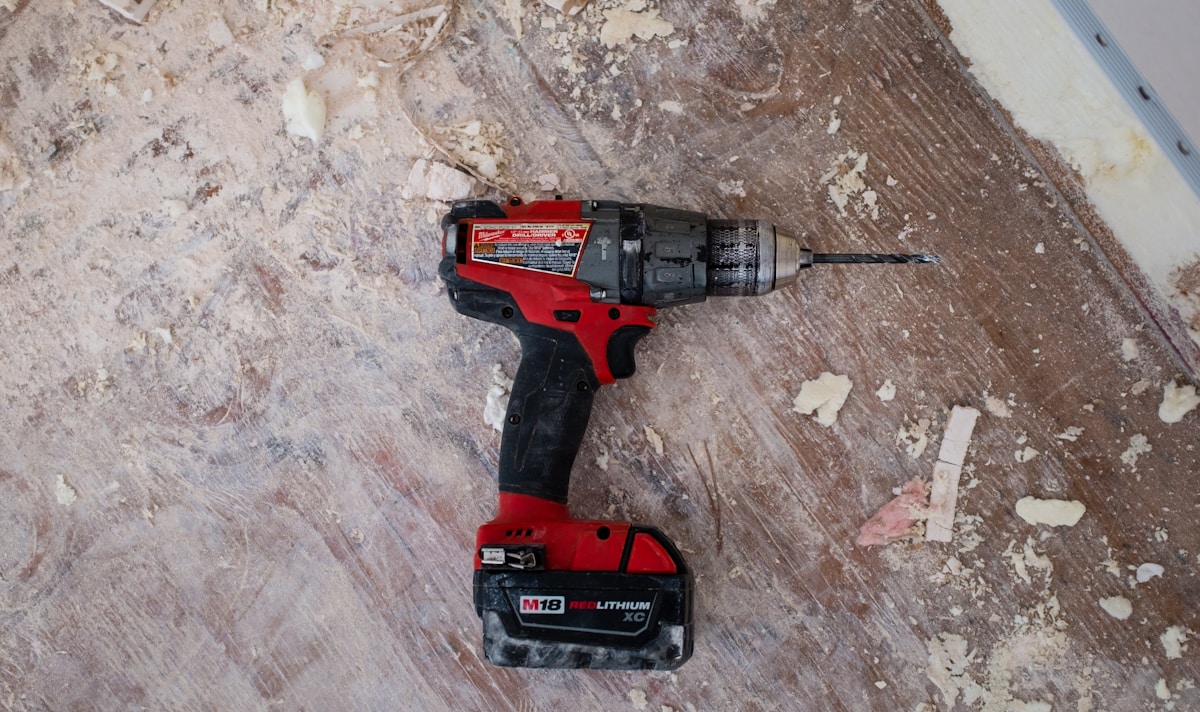
Drill/driver: Cordless is the way to go. 18V or 20V is plenty of power. Get extra batteries — running out mid-project is incredibly annoying.
Clamps: You’ll never have enough. I’m convinced this is a universal law. Start with 4-6 bar clamps in the 12-24″ range. Add more as projects demand them.
Wood glue: Titebond or similar yellow glue. Properly done glue joints are often stronger than the wood itself. That still blows my mind.
Work Surface
You need something sturdy to work on. A real workbench is ideal, but two sawhorses and a sheet of 3/4″ plywood gets the job done when you’re starting. I worked on a setup like that for my first year and built plenty of decent projects.
What You Don’t Need Yet
Table saw, jointer, planer, router, bandsaw — these are all great tools, but they’re not essential for beginners. You can build plenty of projects with hand tools and a circular saw. Add the bigger stuff as specific projects demand them.
Probably should have led with this section, honestly. Too many people spend thousands before making their first cut.
Buy As You Go
Start with basics. When a project needs a tool you don’t have, buy it then. That way you’re getting tools you’ll actually use instead of filling a garage with equipment that collects dust. That’s what makes woodworking endearing to us beginners — every new tool you add is because you’re ready for it, not because some list told you to buy it.

Stay in the loop
Get the latest classic custom wood furniture updates delivered to your inbox.