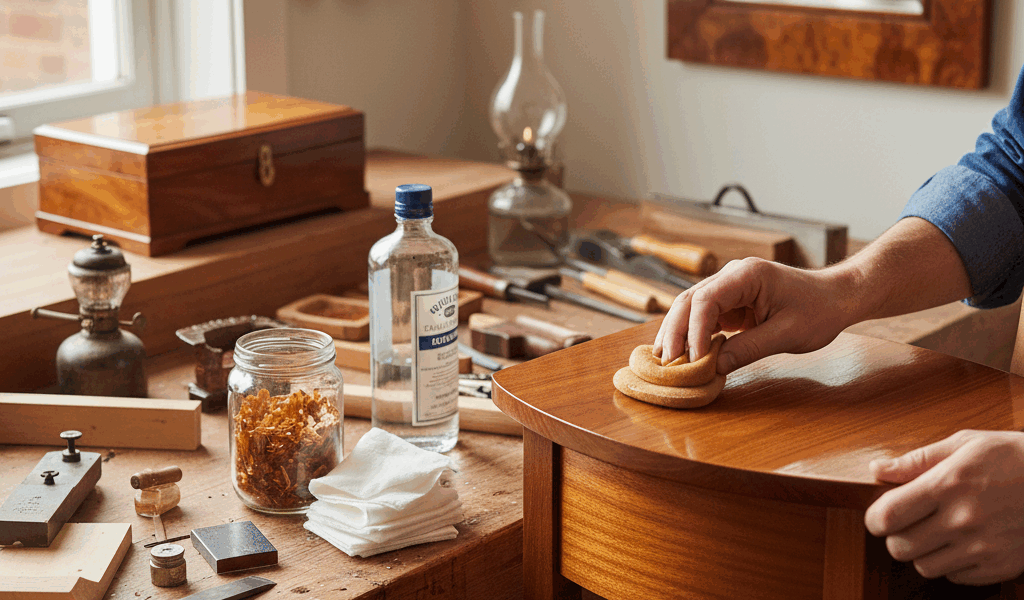
Shellac finishing has gotten complicated with all the debate about French polish versus padding versus brushing flying around. As someone who has been working with shellac for longer than I care to admit, I learned everything there is to know about this ancient and still-amazing finish. Today, I will share it all with you.
Why Shellac Still Matters
Shellac comes from bugs. Specifically, the lac beetle secretes a resin that gets harvested, processed into flakes, and dissolved in alcohol to make a finish. Weird, right? But here is the thing — that warm amber glow you see on antique furniture is almost always shellac. Nothing else looks quite like it. Modern polyurethane looks plastic by comparison. I have been using both for decades, and shellac has a warmth and depth that synthetic finishes just cannot match.
It dries incredibly fast. We are talking minutes, not hours. You can build multiple coats in a single afternoon. Try that with oil-based polyurethane and you will be waiting three days. That’s what makes shellac endearing to us furniture finishers — it rewards patience with speed and beauty that no other finish delivers.
Mixing Your Own Shellac
Probably should have led with this section, honestly. If you are serious about shellac finishing, mix your own from flakes.
Buy shellac flakes online or from a specialty finishing supplier. Dissolve them in denatured alcohol. The concentration is measured in “pound cuts” — a two-pound cut means two pounds of flakes dissolved in one gallon of alcohol. That is a good starting point for brush-on application. For French polishing, I thin it down to about a one-pound cut for better control.
Fresh shellac works dramatically better than the pre-mixed stuff from the hardware store. Those cans might have been sitting on the shelf for years. Old shellac does not dry properly — it stays tacky and soft and will drive you absolutely insane. I learned this the hard way on a walnut jewelry box that stayed sticky for weeks. Mix it yourself and you will never go back. Flakes have a shelf life too, but it is much longer than the liquid, especially if you store them in a cool dark place.
You can choose different shellac colors too. Orange shellac adds warmth to dark woods. Blonde or super blonde is nearly clear and works great on light woods where you want to preserve the natural color. Garnet shellac has a deep reddish tone that looks stunning on mahogany. I keep all three in mason jars in my finishing cabinet.
Application Methods
Brushing is the simplest approach. Use a natural bristle brush and lay on thin coats. The alcohol evaporates fast, so work quickly and do not go back over areas that are starting to set up. Let each coat dry — ten to fifteen minutes is usually enough — then sand lightly with three-twenty grit and apply the next coat. Three to four coats gives a nice build.
Pad application is what I use most often. Make a pad from cotton wadding wrapped in a lint-free cloth. Charge the pad with shellac, add a tiny drop of mineral oil to the face of the pad so it does not stick, and rub the shellac onto the surface in long, even strokes. Overlap each pass. The pad lets you build thin, even coats without brush marks.
French polish is the fancy version of pad application. Same basic idea, but you work in circles and figure-eights, building up dozens of micro-thin layers into a finish that looks like liquid glass. It takes practice. My first French polish attempt looked like I had smeared the wood with grease. My tenth attempt was passable. By my thirtieth, I was getting compliments. Stick with it if you want the absolute best finish shellac can produce.
The Honest Limitations
Water marks shellac. Set a wet glass on a shellac-finished table and you get a white ring. Alcohol dissolves it — which is both a feature and a bug. Spill wine? You have a problem. The upside is that shellac is the easiest finish to repair. Wipe the damaged area with a cloth dampened with alcohol and the shellac re-dissolves and re-levels itself.
It is not heat resistant either. A hot coffee mug straight from the microwave will leave a mark. This is not the finish for kitchen tables or surfaces that take daily abuse.
Where shellac excels is on pieces that get admired more than used. Display cabinets. Interior drawer surfaces where it seals odors beautifully. Picture frames. Jewelry boxes. Musical instruments. Clocks. In these applications, its beauty and ease of repair outweigh the durability limitations. Know the strengths, work within them, and shellac will reward you with a finish that ages gracefully for generations.

Stay in the loop
Get the latest classic custom wood furniture updates delivered to your inbox.