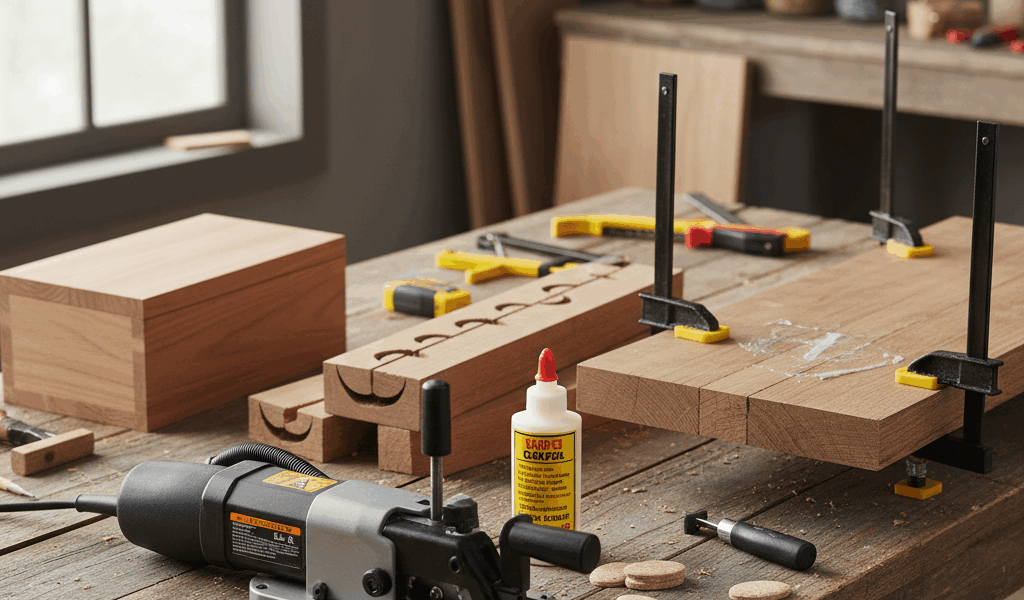
Biscuit joiners have gotten complicated with all the debate about whether they’re overhyped or underrated. As someone who’s used plate joiners on hundreds of cabinet projects, I learned everything there is to know about when they make sense and when they don’t. Today, I will share it all with you.
This article includes affiliate links. We may earn a commission at no extra cost to you.
You’re building a large tabletop from multiple boards. Keeping edges perfectly aligned during glue-up is frustrating — boards slip out of alignment as you apply clamps. Biscuit joiners solve this problem, but other woodworkers say biscuits don’t add meaningful strength. So which is it?
The answer: biscuit joiners excel at specific tasks — edge alignment, panel assembly, and quick case construction — but aren’t appropriate for structural joints or situations demanding maximum strength.
What Biscuit Joinery Actually Does
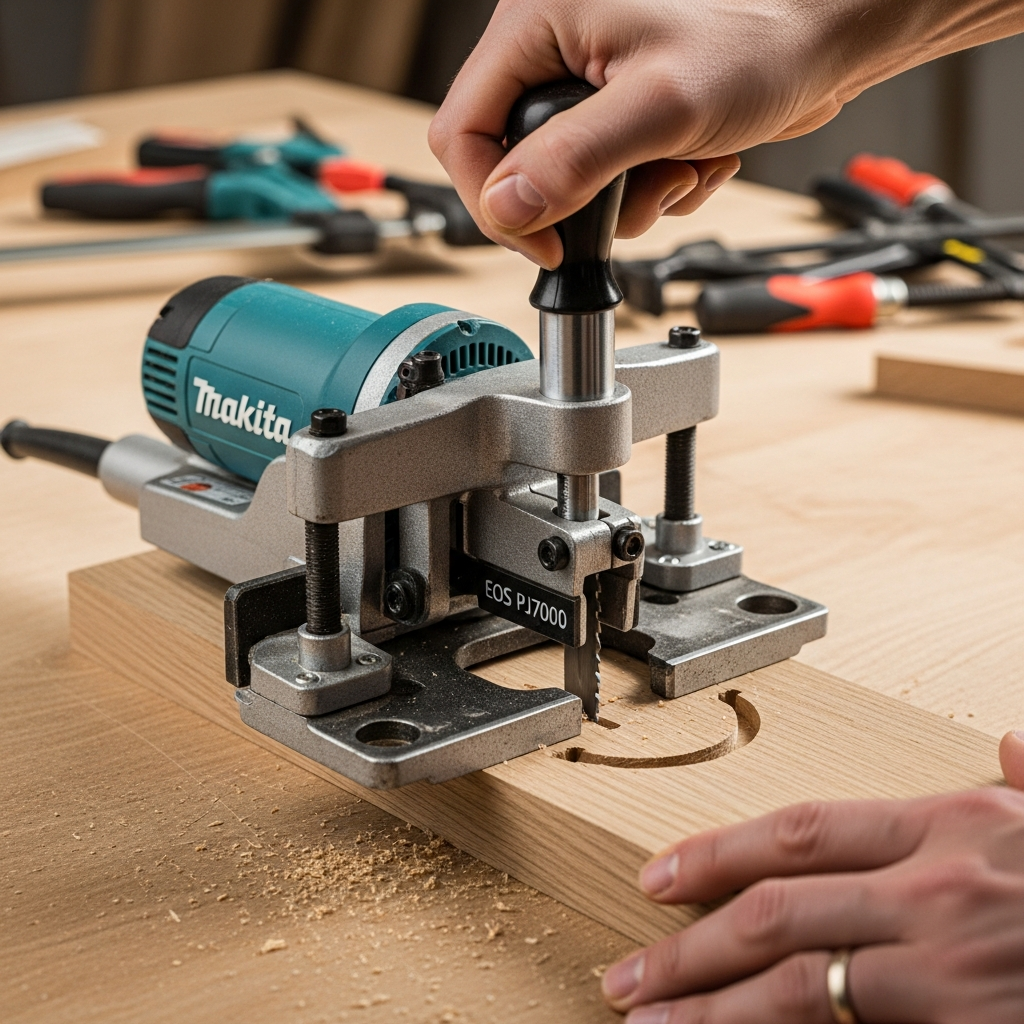
A biscuit joiner (also called plate joiner) cuts crescent-shaped slots in mating wood pieces. Compressed beechwood “biscuits” fit into these slots. When glue contacts biscuits, they swell, filling slots tightly and aligning pieces.
The process:
1. Mark layout lines on both pieces where joints will align
2. Set biscuit joiner fence to center slots in material thickness
3. Align joiner index mark with layout mark
4. Plunge joiner blade into wood, cutting crescent slot
5. Repeat on mating piece at same locations
6. Apply glue to slots and biscuits
7. Insert biscuits and join pieces
8. Clamp until dry
That’s what makes biscuit joiners endearing to us cabinet makers — they provide alignment, speed, hidden joinery, and modest strength increase. What they don’t provide: maximum strength, long-grain to end-grain strength, precision fit, or replacement for good glue joints.
Where Biscuit Joinery Excels
Edge Joining Panels
Probably should have led with this section, honestly. Creating wide panels from multiple narrow boards is where biscuit joiners prove most valuable.
The problem biscuits solve: During glue-up, boards slip vertically as you tighten clamps. One board ends up 1/16 inch higher than its neighbor. You spend time sanding to flatten — work that should be unnecessary.
Biscuit solution: Biscuits keep board edges aligned at same height during clamp-up. Minimal sanding needed after glue dries.
Space biscuits 6-12 inches apart along edge. Use #20 biscuits for material 3/4 inch or thicker. Use #10 biscuits for material 1/2 to 3/4 inch.
Strength consideration: Edge-to-edge long-grain glue joints are already extremely strong. Biscuits add minimal strength. Their value is alignment, not reinforcement.
Cabinet and Case Assembly
Building plywood cabinets or cases goes faster with biscuits than traditional joinery.
Applications: Attaching cabinet sides to top/bottom, joining face frames to cases, connecting shelving units, built-in cabinets and closet systems.
Why biscuits work here: Plywood doesn’t show well with exposed joinery anyway. Biscuits are quick — dozens of joints in minutes. Hidden joinery looks clean. Cabinet loads are shear forces which biscuits handle adequately when combined with glue and screws.
Best practices: Biscuits + glue (cleanest look), biscuits + screws without glue (allows disassembly), biscuits + glue + screws (maximum strength for heavy-duty storage).
Miter Joint Alignment
Mitered corners are difficult to align during glue-up. Biscuits register corners perfectly.
Cut miters accurately first — biscuits don’t fix bad cuts. Clamp mating pieces together, mark biscuit locations across joint, separate and cut slots, then glue and assemble.
Strength note: Biscuits in miters add some strength but miters are inherently weak. Don’t rely on biscuits alone for stressed joints. Add splines or corner blocks.
Face Frame Attachment
Attaching face frames to plywood cases is faster with biscuits than pocket screws and leaves no visible holes.
Benefits over pocket screws: No visible holes on interior, faster setup, better alignment.
Many cabinet makers use both — biscuits for alignment plus a few pocket screws for clamping force.
Where Biscuit Joinery Fails
Structural Joints Under Stress
Biscuits aren’t appropriate for joints bearing significant loads or experiencing racking forces.
Don’t use biscuits for: Table leg-to-apron joints, chair leg-to-seat joints, bed frame joints, drawer fronts to drawer sides. Use mortise-and-tenon, dowels, bridle joints, or dovetails instead.
Why biscuits fail here: They’re thin (3-4mm) and made from compressed wood that can crush under heavy loads. Slots are oversized, allowing movement.
End Grain Joinery
Biscuits inserted into end grain don’t hold well. End grain doesn’t glue well — wood fibers absorb glue like a sponge without creating strong bond.
Examples of bad end-grain biscuit joints: Leg-to-apron, shelf end to cabinet side, rail end to stile end. Use mortise-and-tenon or dowels instead.
Very Narrow Stock
Material under 1/2 inch thick may not accommodate biscuits without slots breaking through face/back. Thinner material needs splines, rabbet joints, or simply glue.
Biscuit Sizes and Selection
#0: 47mm x 15mm — for material 3/8″ to 1/2″ thick
#10: 53mm x 19mm — for material 1/2″ to 3/4″ thick, most common
#20: 56mm x 23mm — for material 3/4″ or thicker, maximum strength
Rule of thumb: Use largest biscuit that fits without breaking through surfaces.
Buying Considerations
Budget options ($100-150): Porter Cable, Ryobi, Skil. Adequate for occasional use but less precision and durability.
Mid-range ($150-300): DeWalt DW682K, Makita PJ7000. Better build quality, more powerful motors, dust collection ports.
Professional ($300-600): Lamello, Festool. Precision engineering, repeatable accuracy, durable for daily use.
Festool Domino ($1,000+) uses larger loose tenons for much stronger joints. Worth it for professional furniture makers needing strength plus speed.
The Verdict
Biscuit joiners are alignment tools that add modest strength, not structural joinery. They excel at speeding cabinet construction, registering panel glue-ups, and creating invisible joints in plywood cases. They fail at structural joints, end-grain applications, and situations demanding maximum strength.
Understand where biscuits excel and where they fail, and you’ll know whether plate joiners make sense for your work.


Stay in the loop
Get the latest classic custom wood furniture updates delivered to your inbox.